
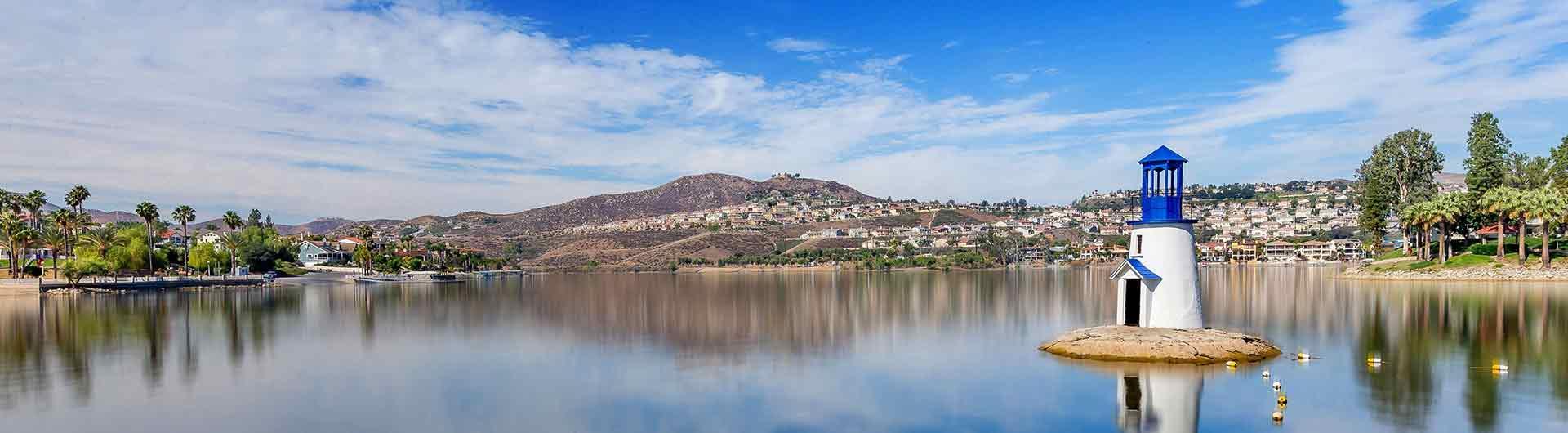
How Canyon Lake Fits in the Watershed
Canyon Lake may feel like a quiet, contained body of water tucked inside a gated community, but in reality, it is part of a much larger and dynamic ecosystem. The lake is situated in the San Jacinto River watershed, a vast area of more than 700 square miles that stretches across Riverside County. A watershed is simply the land area where rainfall and runoff drain to a common outlet. For Canyon Lake, that outlet is the Railroad Canyon Dam, which releases water into Lake Elsinore and, eventually, the Santa Ana River system.
What Role Does Canyon Lake Play?
As a reservoir, Canyon Lake plays multiple roles. It is a drinking water supply managed by Elsinore Valley Municipal Water District, a recreational hub for boating and fishing, and a critical storage basin that helps control water flows downstream. Because it sits along the San Jacinto River, the lake collects runoff from upstream cities, neighborhoods, farms, and open lands before releasing water to Lake Elsinore. This means Canyon Lake acts like a checkpoint: the quality of water entering the lake directly influences what eventually flows downstream.
The connection to Lake Elsinore is especially important. Canyon Lake helps regulate inflows, slowing the surge of stormwater and trapping some of the sediments and nutrients that would otherwise flood directly into Lake Elsinore. But it also means that when Canyon Lake experiences nutrient problems or harmful algal blooms, those issues don’t stop at the dam — they can ripple outward to affect water quality in Lake Elsinore and the Santa Ana River system. This is why state regulators and regional agencies manage Canyon Lake and Lake Elsinore together under the same nutrient reduction programs.
Upstream Challenges
One of the biggest challenges comes from what happens upstream. Urban runoff carries:
- fertilizers and waste from lawns
- oil and metals from streets
- and pet waste from neighborhoods
In agricultural areas, manure and fertilizers contribute significant nitrogen and phosphorus to the river. All of this flows downhill, concentrating in Canyon Lake. These nutrients fuel algae growth, while sediments cloud the water and reduce storage capacity. The result is a lake under constant stress from outside sources it does not control.
How Are These Challenges Mitigated?
Inside Canyon Lake, lake managers can apply tools like alum treatments to lock up phosphorus or use targeted algaecides during harmful blooms. These strategies improve conditions for fish and recreation, but they are only part of the solution. Long-term lake health depends on reducing the nutrient and sediment loads before they ever reach the lake. This means:
- better educating the public on best practices
- better stormwater management in upstream cities
- careful use of fertilizers and pesticides
- improved wastewater and septic controls
- and agricultural best practices such as buffer strips and soil management
Canyon Lake matters in the watershed because it is both a resource and a warning signal. When the lake is healthy, it supports recreation, wildlife, and clean water downstream. When it struggles, it reveals the cumulative impact of how we treat land across the entire San Jacinto basin. Protecting Canyon Lake is not just a local responsibility, it is a regional effort that connects neighborhoods, farms, cities, and rivers across Southern California. By working together inside and outside the lake, the community can ensure this reservoir remains a strong link in the watershed chain.
Article contributed by the Lake Advocacy Committee.
Do you have feedback, questions, or ideas for future Lake Education articles? Email us at [email protected].
Interested in joining the Lake Advocacy Committee. Complete an application today. Click here.